
For most manufacturers, the question isn't which 3D printer to buy. It's whether printed composite tooling belongs in their operation at all.
The answer comes down to results. Here's what four very different projects have shown.
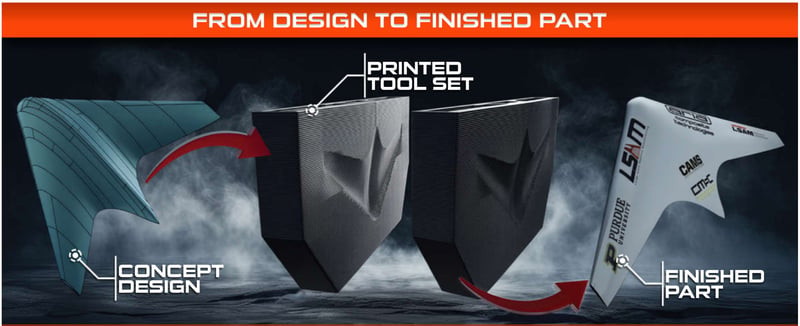
From concept design, to printed tool set, to finished part: a two-sided drone layup tool printed on LSAM.
1. Printed vs. Traditional, Head to Head
Aria Composite Technologies and Purdue University
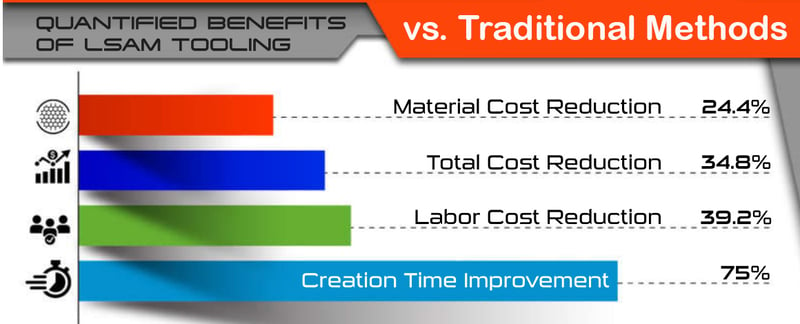
To compare the two approaches directly, Thermwood, Aria Composite Technologies and Purdue University's Composite Manufacturing and Simulation Center (CMSC) built a two-sided autoclave layup tool for a blended wing drone body two ways: by the traditional method, and printed on an LSAM in 20% carbon fiber reinforced polycarbonate. The LSAM tool outperformed the traditional method in cost, speed and overall performance.
- Tool cost: $8,500 traditional vs. $5,539.50 printed
- Time to tool: 10–12 days traditional vs. 3 days printed
- 34.8% total cost reduction, including 39.2% lower labor cost
- 75% faster tool creation
"Tools were easier to work with, excellent performance with no signs of wear after 6 complete cycles on each half."
Kevin Cain, Chief Technology Officer, Aria Group
See the full drone tool comparison
2. Save at Production Scale
General Atomics
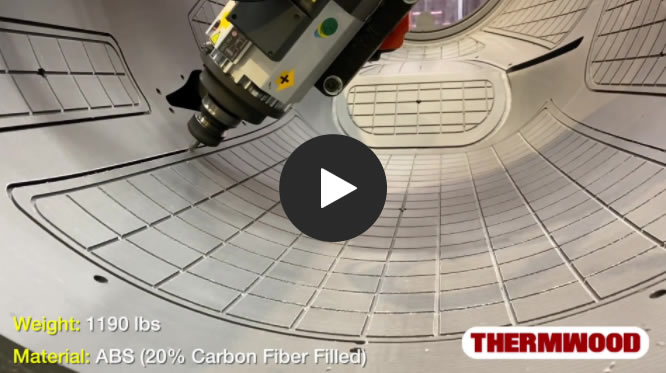
General Atomics needed a large CNC trim tool. Printed on an LSAM in ABS with 20% carbon fiber and then machined to final shape, the 1,190 lb tool came in at about $50,000 less than traditional methods.
- Lead time cut from 6–8 weeks to under 2
- 2–3x cost reduction
- 3–4x faster development
- A production-capable tool with vacuum integrity, no coatings needed
See the full General Atomics story
3. Bring Tooling In-House
D-J Engineering
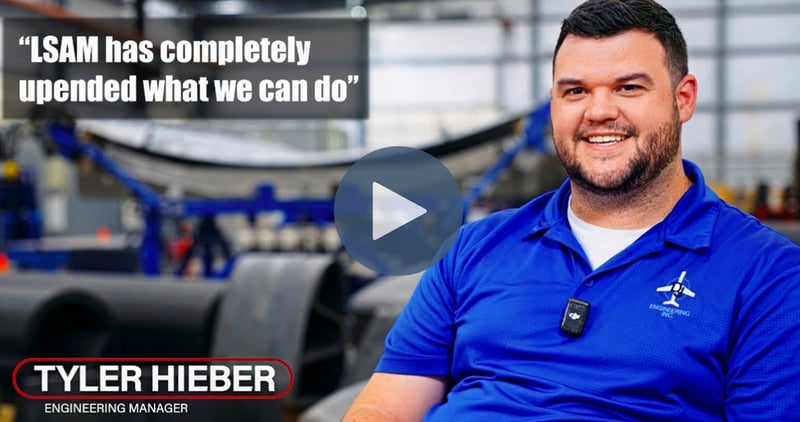
Aerospace manufacturer D-J Engineering of Augusta, Kansas stopped waiting on outside tool shops. With its own LSAM, D-J now produces stretch form blocks, mill fixtures and complex aerospace tooling in weeks instead of months.
"LSAM has completely upended what we can do."
Tyler Hieber, Engineering Manager, D-J Engineering
Watch the D-J Engineering story
4. Move Faster on New Designs
Tidal Blade Research, with Purdue, Sheffield and Oxford
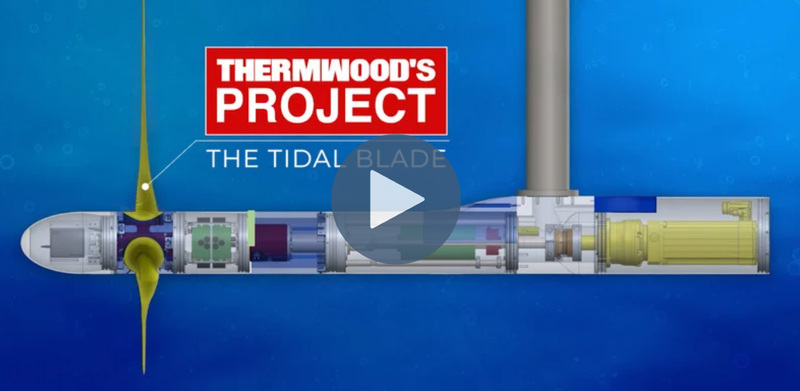
When a design is still evolving, waiting months on every tool slows progress. For a 2-meter tidal turbine blade developed by the Universities of Sheffield and Oxford, a double-sided infusion tool was printed on an LSAM in carbon fiber reinforced polycarbonate, cutting tooling time from months to weeks.
- Purdue's ADDITIVE3D simulation predicted the print before the first layer went down
- Sheffield's AMRC machined in sensor slots, root mounts and resin ports
- When the design changes, the next tool can be printed again in weeks
Learn more about the tidal blade project
The Common Thread
Lower tooling costs. Shorter lead times. The freedom to change a design without starting over. And tooling built under your own roof, on your own schedule.
Why LSAM
LSAM prints and trims on one system, so a tool goes from file to finished part in one place. It's built by Thermwood, a machine tool company with 55+ years of experience, and it's already producing tooling for aerospace, defense, marine and energy manufacturers.
Evaluating large-format additive for production?
If you're considering LSAM for your operation, tell us about your application and timeline, and we'll connect you with our LSAM team.


